
What does OSHA require for handwashing on a job site?
The baseline is straightforward. OSHA 1926.51(c) sets toilet ratios by crew size: one facility for 20 workers or fewer, then one toilet seat and one urinal per 40 workers as you scale past that, dropping to one per 50 once you hit 200 or more. Handwashing rides alongside this. Under 29 CFR 1910.141(d)(2), washing facilities need actual soap and towels or a hand-drying device; sanitizer alone does not meet that standard, so a dispenser bolted to a fence post will not cut it on an inspection. If your Skokie crew is applying paint, coatings, herbicides or insecticides, OSHA 1926.51(f)(1) kicks in separately and requires washing facilities specifically because of those contaminants. Potable water also has to be on hand under OSHA 1926.51(a)(1), which is why a portable sink rental with a fresh-water tank does double duty. We size units the same way we size toilets, using the guidance on how many porta potties do i need as the starting point, then layer washing stations by headcount and task, not by guesswork.
Where should handwashing stations go on a Skokie site?
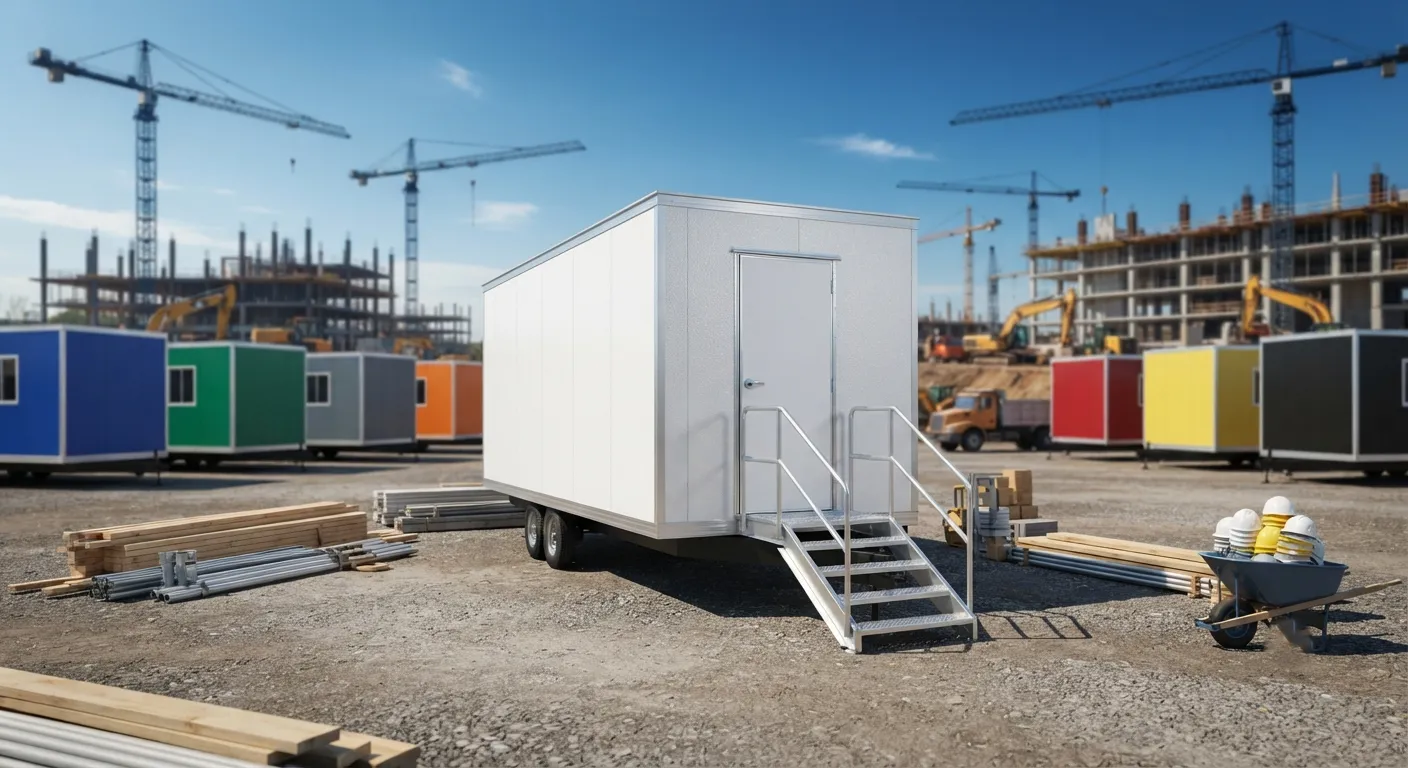
Put them where people actually eat, smoke, and leave the toilet, not tucked in a back corner. That means near your cluster of portable toilet rental units, near any food prep or break area, and near anywhere herbicides, insecticides, paints or coatings are staged. If you are running a mixed-use site with construction site services alongside a public-facing event, you need two separate clusters: one for the crew, one for guests. ANSI/PSAI Z4.3 sets the baseline service interval at once weekly for up to 10 users over a 40-hour week, which is the number we plan servicing around so a station never runs dry mid-project. Placement also has to account for accessible routes. If your site includes an ada accessible porta potty, the same accessible path rules apply to the handwash unit next to it: ADA Standards 403.5.1 calls for a 36 inch clear route, and section 304.3.1 requires a 60 inch turning circle nearby. A crowded jobsite in Skokie, especially one within a few blocks of downtown, often has less room to work with than a lot in Wilmette or Niles, so we walk the site before we drop anything.
Are handwashing stations required for outdoor events too?
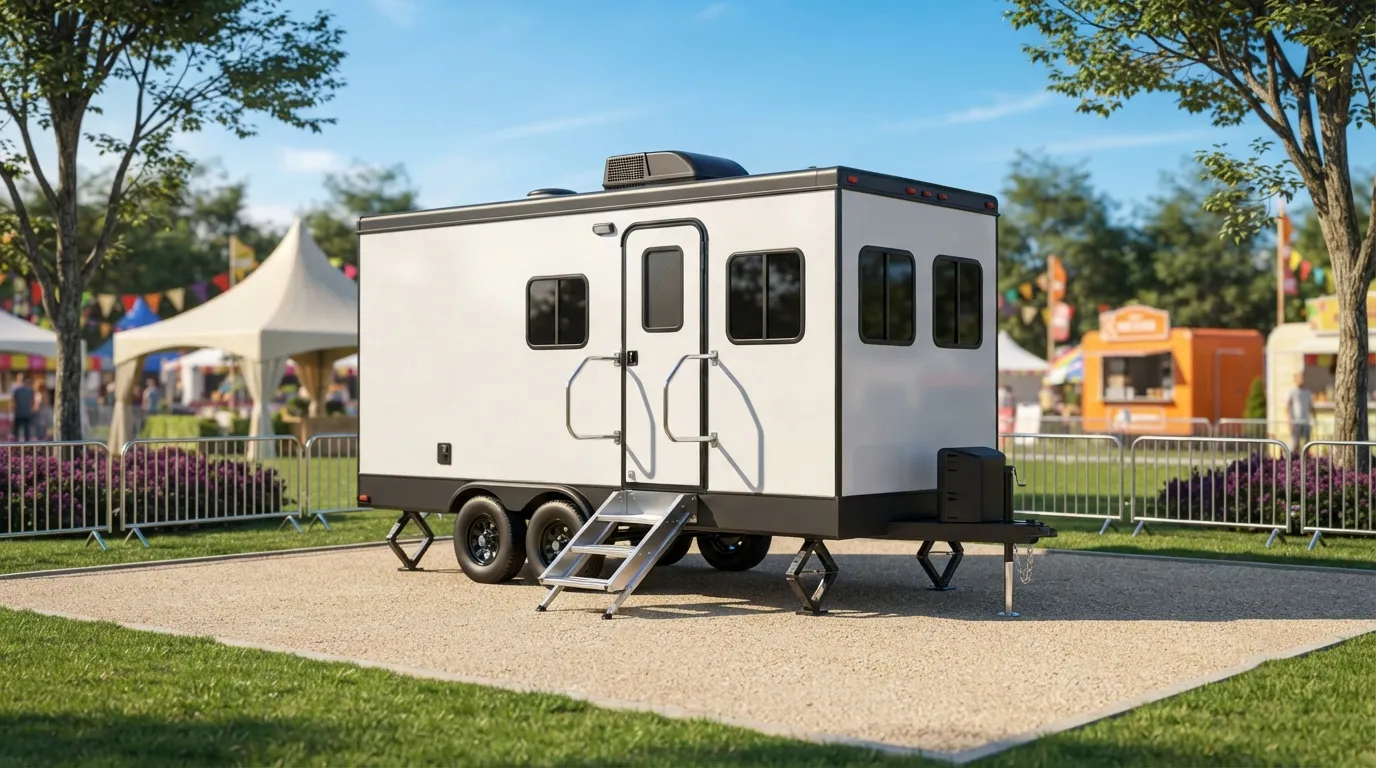
Yes, and the standard does not relax just because it is a wedding or a festival instead of a construction site. Anywhere food is served, anywhere guests are using event restroom rental units, a handwashing setup belongs in the layout. We handle this constantly for wedding restroom rental bookings and festival restroom rental jobs across Skokie, and the same logic covers a concert restroom rental or a marathon and race restrooms setup where hundreds of people cycle through in a few hours. Farms have their own version of this rule: OSHA 1928.110 requires potable water, toilets and handwashing for hand-labor employees in agriculture, at one facility per 20 workers, and it has to sit within a quarter mile walk of where people are working. That is directly relevant for any farm and agricultural restrooms job we run outside the city core. Bigger events sometimes pair handwashing with a full restroom trailer rental, since trailers often include integrated sinks and cut the unit count you need on-site.
How many handwashing stations does a Skokie site actually need?
Match the count to your toilet count, not to a flat number. If OSHA 1926.51(c) puts you at four toilets for your crew size, plan on a washing station at each cluster point, not one lonely unit at the gate. Grease-heavy operations have their own trigger: a grease interceptor gets pumped once fats, oils, grease and solids reach 25 percent of liquid depth, and any crew working near that kind of buildup needs handwashing close by, which is part of why we handle grease trap pumping and station placement as one conversation, not two. For general reference, sites further out, like a project near Park Ridge at 6.6 miles west or Glenview at 8.0 miles northwest, still fall under the same OSHA framework Skokie sites do. There is no distance-based exemption. Below is how we typically scale stations against crew size for planning purposes.
| Crew size | Toilets required | Handwash stations recommended |
|---|---|---|
| 1-20 | 1 | 1-2 |
| 21-60 | 2 (per ratio) | 2-3 |
| 61-100 | 3 | 3-4 |
Do hand sanitizer stations meet the requirement?
No, not on their own. 29 CFR 1910.141(d)(2) specifically requires soap and towels or a drying device; sanitizer is a supplement, not a substitute. We still stock a hand sanitizer station rental as an add-on for high-traffic entry points, but it sits next to a real sink, never instead of one.
What is the difference between a handwashing station and a portable sink?
Not much in practice. Most units we place are the same freestanding sink with a foot pump, fresh tank, and gray water tank. "Handwashing station" is the compliance term; "portable sink" is what people call it on-site.
Do I need a handwashing station for a small home project?
Usually yes if you have hired labor on-site, even for a short job. Homeowners doing their own home renovation porta potty project without outside crew are not bound by OSHA, but any subcontractor on payroll changes that.
How often do handwashing stations get serviced?
Weekly is standard under the ANSI/PSAI Z4.3 baseline for typical use. High-traffic sites, food service, or anything tied to septic pumping service work often needs twice-weekly visits instead.
Can I rent just a handwashing station without toilets?
Yes. Some Skokie job sites already have restroom access inside a building and only need washing coverage outdoors near a work zone or entry point. We price that separately from a full portable restroom rental package.
Next step
Get a delivery date
Tell us the address, the dates and the headcount. We size the order and confirm the route.